단체전 Group Exhibition
이야기는 물가에서 시작됐다
The Story began at the Water's edge
2025. 05. 29 - 2025. 06. 01
강원도 홍천군 영귀미면 속초1리 원개울 빨래터


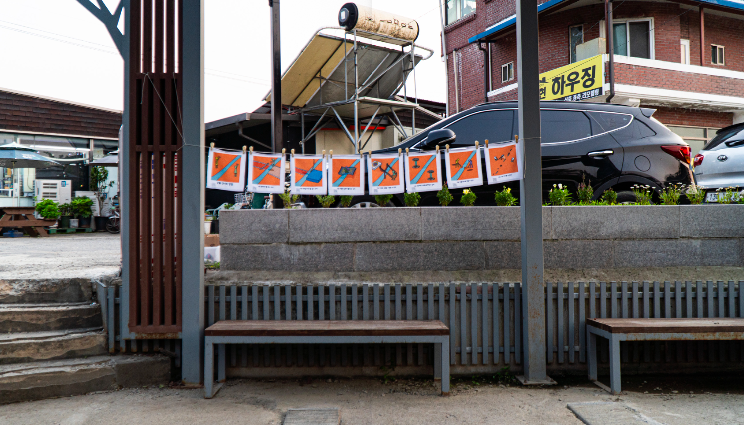


'2025 월간 영귀미' 5월
■ 이야기는 물가에서 시작됐다
The story began at the water’s edge
예술감독 박주희
Art Director, Joohee Park
‘2025 월간 영귀미’의 첫 전시는, 마을의 물가에서 시작됩니다. 과거 속초1리의 중심에는 ‘빨래터’가 있었습니다. 그곳은 단순히 삶을 유지하기 위한 노동의 공간이 아니라, 여성들이 모여 하루를 풀어내고, 삶의 무게를 나누던 이야기의 장소였습니다. 때로는 수다로, 때로는 한숨으로 흘러나온 말들은 고단한 삶을 버티게 해준 정서적 지지였고, 공동체를 엮는 힘이기도 했습니다.
오늘날에도 이야기는 여전히 마을의 여러 곳에서 흐르고 있습니다. 돌봄센터, 서별 카페, 그리고 ‘꿈틀’과 같은 공간들은 서로 다른 삶이 만나고, 감정이 오가고, 기억이 쌓이는 또 하나의 물가가 되어줍니다. 빨래터가 물리적 생존의 현장이었다면, 이 공간들은 정신적 생존의 자리를 상징하며, 삶을 잇는 새로운 이야기의 중심이 되고 있습니다.
빨래터가 놓인 자리는 ‘원개울’이라 불리던 오래된 물길의 흔적 위에 있습니다. 지금은 초등학교 뒤편 골짜기로 남아 있지만, 예전에는 ‘소니골’, ‘먹방골’, ‘속새울’에서 흘러온 물이 이곳으로 모였습니다. 시간이 흐르며 물길은 바뀌었고 개울은 그 기능이 많이 사라졌지만, 그 자리에 남은 빨래터는 여전히 마을의 기억을 품고 있습니다. 사람들은 이 물줄기를 ‘원포’라 부르기도 했습니다. 아마 그 끝 어딘가에 조그만 포구가 있었을지도 모릅니다.
이번 전시는 빨래터라는 장소를 통해 ‘말함으로써 살아가는 삶들’을 들여다보려 합니다. 말은 때로 밥보다 절실한 것이었고, 함께 말할 수 있는 존재는 삶을 지탱하는 닻이 되었습니다. 우리는 이 물가에서 시작된 이야기들을 다시 불러내어, 오늘의 여러 장소에서 다시 이어가고자 합니다. 이 흐름 속에서 당신의 기억도 함께 머무르기를 바랍니다.
The first exhibition of ‘2025 Monthly Yeonggwimi’ begins by the village stream. In the past, at the heart of Sokcho 1-ri stood the laundry site. It was more than a place for washing clothes — it was where women gathered to share their days, to speak of their burdens, and to support one another through stories. The words exchanged there, sometimes lighthearted and sometimes heavy with sighs, served as emotional support and a thread that wove the community together.
Even today, stories continue to flow through the village. Spaces like the community care center, the Seobyul Café, and Kkumtle have become new gathering spots — places where lives intersect, emotions are shared, and memories accumulate. If the laundry site once symbolized physical survival, these spaces now embody emotional survival, becoming the new centers of shared stories and connection.
The laundry site sits where an old stream once flowed — a place once called Wongaewool. Though now just a gully behind the elementary school, it used to collect water from Sonigol, Meokbanggol, and Soksaeul. Over time, the watercourse shifted, and the stream gradually disappeared. Yet, the laundry site remains, holding the memory of the village. Locals once called the waterway Wonpo — perhaps there was once a small port at its end.
This exhibition looks closely at the lives sustained through speech — at how speaking, at times, was more essential than food, and how the presence of someone to speak with was like an anchor in life. From this water’s edge, we hope to bring these stories back into the present, connecting them to the places where today’s conversations still flow. We invite your memory to pause and join the current of these stories.